



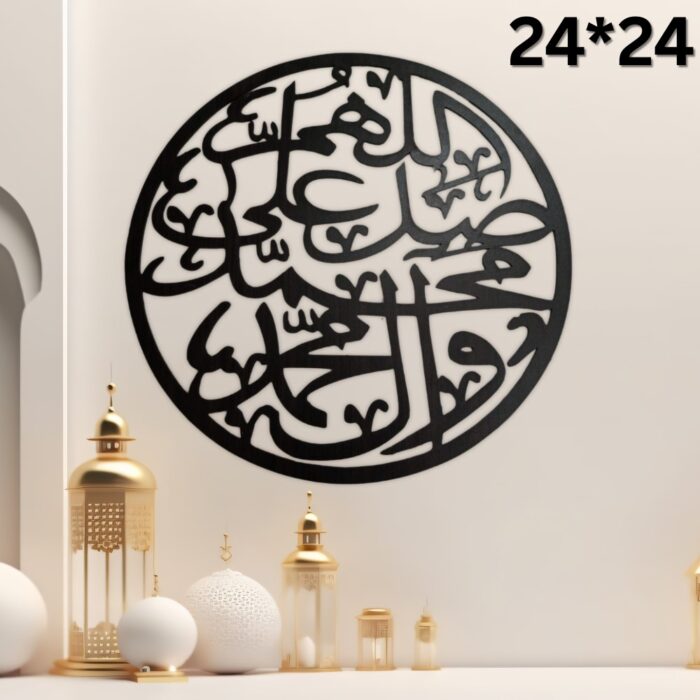
Islamic Art 3D Darood Pak Calligraphy Muslim Home Decoration and office
Throughout history, Islamic art has been a powerful expression of culture, faith, and creativity. From the intricate geometric patterns of ancient mosques to the vibrant calligraphy found in sacred texts, Islamic art represents a unique blend of spiritual symbolism and artistic excellence. At Glazmart.com, we celebrate this rich heritage by offering products inspired by traditional and modern interpretations of Islamic art. Whether you’re a collector, a decorator, or simply someone who appreciates beauty with meaning, exploring Islamic art is a journey into a world where form and faith come together.
What is Islamic Art?
Islamic art refers to a broad range of visual arts created in the Islamic world. It encompasses various styles, materials, and functions, but it is united by spiritual and cultural themes rooted in Islam. Unlike Western art traditions, which often focus on human or animal representations, Islamic art tends to avoid figurative imagery, especially in religious contexts. Instead, it emphasizes:
• Geometric patterns
• Arabesque motifs (stylized floral and vegetal designs)
• Calligraphy (especially verses from the Quran)
• Architecture and decorative arts
Islamic art is not confined to a single region or period. It spans over 1,400 years and covers vast territories — from Spain and North Africa to the Middle East and Southeast Asia.
The Core Elements of Islamic Art
To truly appreciate Islamic art, it's important to understand its foundational elements:
1. Calligraphy
Calligraphy is the most revered art form in Islamic culture. Because the Quran is the word of God (Allah) revealed in Arabic, the script used to write it is considered sacred. Artists use calligraphy to decorate everything from mosque walls to everyday items like ceramics, textiles, and even modern home décor. Calligraphy isn't just writing — it's an art form that transforms words into visual masterpieces.
2. Geometry
Geometric design is a hallmark of Islamic art. Artists create complex patterns using simple shapes like circles, squares, and triangles, arranged in infinite combinations. These patterns symbolize the unity and infinite nature of God. The precision and repetition found in Islamic geometric art reflect the spiritual goal of achieving harmony and balance.
3. Arabesque Patterns
Arabesque patterns involve interlacing foliage, vines, and floral motifs. These continuous, flowing designs are often used to decorate architectural surfaces and textiles. Like geometry, arabesques are designed to suggest infinity and the interconnectedness of life, reinforcing the spiritual worldview of Islamic culture.
4. Aniconism
Islamic religious art avoids depictions of sentient beings (especially in sacred contexts) due to concerns about idolatry. As a result, Islamic artists developed alternative means of expression, focusing on abstract, decorative, and symbolic art forms.
The Role of Architecture in Islamic Art
Some of the most famous examples of Islamic art are found in architecture. Grand mosques, palaces, and tombs across the Islamic world are adorned with intricate tilework, carved stone, stained glass, and detailed calligraphy.
Notable examples include:
• The Alhambra in Spain – known for its stunning stucco work and tile mosaics.
• The Blue Mosque in Turkey – famous for its Iznik tiles and elegant domes.
• The Sheikh Zayed Grand Mosque in the UAE – a modern masterpiece blending traditional motifs with contemporary design.
At Glazmart.com, our curated collection is inspired by these iconic structures, bringing the timeless beauty of Islamic architecture into your living spaces.
Islamic Art in Modern Times
Contemporary Islamic art continues to evolve while staying rooted in tradition. Modern artists reinterpret classical motifs using new media, techniques, and themes. Digital art, street art, and mixed media are now common platforms for expressing Islamic aesthetics and identity.
This fusion of past and present is especially popular among younger generations who want to connect with their cultural roots while embracing modernity. Whether through fashion, home décor, or visual arts, the spirit of Islamic art continues to thrive.
• Quality: We use high-grade materials to ensure longevity and satisfaction.
• Meaning: Every product tells a story — of history, faith, and artistic brilliance.
for more info: https://glazmart.com/product/islamic-art-3d-darood-pak-muslim-home-decoration-in-pakistan/
Tags: #IslamicArt #IslamicCalligraphy #ArabicCalligraphy #IslamicDesign
#IslamicPattern #IslamicGeometry #IslamicWallArt #ArabicArt #QuranicArt #SacredGeometry
Throughout history, Islamic art has been a powerful expression of culture, faith, and creativity. From the intricate geometric patterns of ancient mosques to the vibrant calligraphy found in sacred texts, Islamic art represents a unique blend of spiritual symbolism and artistic excellence. At Glazmart.com, we celebrate this rich heritage by offering products inspired by traditional and modern interpretations of Islamic art. Whether you’re a collector, a decorator, or simply someone who appreciates beauty with meaning, exploring Islamic art is a journey into a world where form and faith come together.
What is Islamic Art?
Islamic art refers to a broad range of visual arts created in the Islamic world. It encompasses various styles, materials, and functions, but it is united by spiritual and cultural themes rooted in Islam. Unlike Western art traditions, which often focus on human or animal representations, Islamic art tends to avoid figurative imagery, especially in religious contexts. Instead, it emphasizes:
• Geometric patterns
• Arabesque motifs (stylized floral and vegetal designs)
• Calligraphy (especially verses from the Quran)
• Architecture and decorative arts
Islamic art is not confined to a single region or period. It spans over 1,400 years and covers vast territories — from Spain and North Africa to the Middle East and Southeast Asia.
The Core Elements of Islamic Art
To truly appreciate Islamic art, it's important to understand its foundational elements:
1. Calligraphy
Calligraphy is the most revered art form in Islamic culture. Because the Quran is the word of God (Allah) revealed in Arabic, the script used to write it is considered sacred. Artists use calligraphy to decorate everything from mosque walls to everyday items like ceramics, textiles, and even modern home décor. Calligraphy isn't just writing — it's an art form that transforms words into visual masterpieces.
2. Geometry
Geometric design is a hallmark of Islamic art. Artists create complex patterns using simple shapes like circles, squares, and triangles, arranged in infinite combinations. These patterns symbolize the unity and infinite nature of God. The precision and repetition found in Islamic geometric art reflect the spiritual goal of achieving harmony and balance.
3. Arabesque Patterns
Arabesque patterns involve interlacing foliage, vines, and floral motifs. These continuous, flowing designs are often used to decorate architectural surfaces and textiles. Like geometry, arabesques are designed to suggest infinity and the interconnectedness of life, reinforcing the spiritual worldview of Islamic culture.
4. Aniconism
Islamic religious art avoids depictions of sentient beings (especially in sacred contexts) due to concerns about idolatry. As a result, Islamic artists developed alternative means of expression, focusing on abstract, decorative, and symbolic art forms.
The Role of Architecture in Islamic Art
Some of the most famous examples of Islamic art are found in architecture. Grand mosques, palaces, and tombs across the Islamic world are adorned with intricate tilework, carved stone, stained glass, and detailed calligraphy.
Notable examples include:
• The Alhambra in Spain – known for its stunning stucco work and tile mosaics.
• The Blue Mosque in Turkey – famous for its Iznik tiles and elegant domes.
• The Sheikh Zayed Grand Mosque in the UAE – a modern masterpiece blending traditional motifs with contemporary design.
At Glazmart.com, our curated collection is inspired by these iconic structures, bringing the timeless beauty of Islamic architecture into your living spaces.
Islamic Art in Modern Times
Contemporary Islamic art continues to evolve while staying rooted in tradition. Modern artists reinterpret classical motifs using new media, techniques, and themes. Digital art, street art, and mixed media are now common platforms for expressing Islamic aesthetics and identity.
This fusion of past and present is especially popular among younger generations who want to connect with their cultural roots while embracing modernity. Whether through fashion, home décor, or visual arts, the spirit of Islamic art continues to thrive.
• Quality: We use high-grade materials to ensure longevity and satisfaction.
• Meaning: Every product tells a story — of history, faith, and artistic brilliance.
for more info: https://glazmart.com/product/islamic-art-3d-darood-pak-muslim-home-decoration-in-pakistan/
Tags: #IslamicArt #IslamicCalligraphy #ArabicCalligraphy #IslamicDesign
#IslamicPattern #IslamicGeometry #IslamicWallArt #ArabicArt #QuranicArt #SacredGeometry
Islamic Art 3D Darood Pak Calligraphy Muslim Home Decoration and office
Throughout history, Islamic art has been a powerful expression of culture, faith, and creativity. From the intricate geometric patterns of ancient mosques to the vibrant calligraphy found in sacred texts, Islamic art represents a unique blend of spiritual symbolism and artistic excellence. At Glazmart.com, we celebrate this rich heritage by offering products inspired by traditional and modern interpretations of Islamic art. Whether you’re a collector, a decorator, or simply someone who appreciates beauty with meaning, exploring Islamic art is a journey into a world where form and faith come together.
What is Islamic Art?
Islamic art refers to a broad range of visual arts created in the Islamic world. It encompasses various styles, materials, and functions, but it is united by spiritual and cultural themes rooted in Islam. Unlike Western art traditions, which often focus on human or animal representations, Islamic art tends to avoid figurative imagery, especially in religious contexts. Instead, it emphasizes:
• Geometric patterns
• Arabesque motifs (stylized floral and vegetal designs)
• Calligraphy (especially verses from the Quran)
• Architecture and decorative arts
Islamic art is not confined to a single region or period. It spans over 1,400 years and covers vast territories — from Spain and North Africa to the Middle East and Southeast Asia.
The Core Elements of Islamic Art
To truly appreciate Islamic art, it's important to understand its foundational elements:
1. Calligraphy
Calligraphy is the most revered art form in Islamic culture. Because the Quran is the word of God (Allah) revealed in Arabic, the script used to write it is considered sacred. Artists use calligraphy to decorate everything from mosque walls to everyday items like ceramics, textiles, and even modern home décor. Calligraphy isn't just writing — it's an art form that transforms words into visual masterpieces.
2. Geometry
Geometric design is a hallmark of Islamic art. Artists create complex patterns using simple shapes like circles, squares, and triangles, arranged in infinite combinations. These patterns symbolize the unity and infinite nature of God. The precision and repetition found in Islamic geometric art reflect the spiritual goal of achieving harmony and balance.
3. Arabesque Patterns
Arabesque patterns involve interlacing foliage, vines, and floral motifs. These continuous, flowing designs are often used to decorate architectural surfaces and textiles. Like geometry, arabesques are designed to suggest infinity and the interconnectedness of life, reinforcing the spiritual worldview of Islamic culture.
4. Aniconism
Islamic religious art avoids depictions of sentient beings (especially in sacred contexts) due to concerns about idolatry. As a result, Islamic artists developed alternative means of expression, focusing on abstract, decorative, and symbolic art forms.
The Role of Architecture in Islamic Art
Some of the most famous examples of Islamic art are found in architecture. Grand mosques, palaces, and tombs across the Islamic world are adorned with intricate tilework, carved stone, stained glass, and detailed calligraphy.
Notable examples include:
• The Alhambra in Spain – known for its stunning stucco work and tile mosaics.
• The Blue Mosque in Turkey – famous for its Iznik tiles and elegant domes.
• The Sheikh Zayed Grand Mosque in the UAE – a modern masterpiece blending traditional motifs with contemporary design.
At Glazmart.com, our curated collection is inspired by these iconic structures, bringing the timeless beauty of Islamic architecture into your living spaces.
Islamic Art in Modern Times
Contemporary Islamic art continues to evolve while staying rooted in tradition. Modern artists reinterpret classical motifs using new media, techniques, and themes. Digital art, street art, and mixed media are now common platforms for expressing Islamic aesthetics and identity.
This fusion of past and present is especially popular among younger generations who want to connect with their cultural roots while embracing modernity. Whether through fashion, home décor, or visual arts, the spirit of Islamic art continues to thrive.
• Quality: We use high-grade materials to ensure longevity and satisfaction.
• Meaning: Every product tells a story — of history, faith, and artistic brilliance.
for more info: https://glazmart.com/product/islamic-art-3d-darood-pak-muslim-home-decoration-in-pakistan/
Tags: #IslamicArt #IslamicCalligraphy #ArabicCalligraphy #IslamicDesign
#IslamicPattern #IslamicGeometry #IslamicWallArt #ArabicArt #QuranicArt #SacredGeometry
0 Comments
0 Shares
1K Views

 Arabic
 Français
 Español
 Português
 Deutsch
 Türkçe
 Dutch
Dutch
 Italiano
 Russian
 Romaian
 Portuguese (Brazil)
 Greek
Greek